The first wheelchair-accessible ride can feel like a lot of unknowns. How does the chair get into the vehicle? Where does it sit? What keeps it from moving? Knowing the general sequence ahead of time takes much of the worry out of it, both for the rider and for the family member who booked the trip.
This post describes how wheelchair-accessible transportation commonly works across the industry. For anything specific to your trip, our dispatch team is the best source.
Before the vehicle arrives
When you request wheelchair transportation, tell us that the rider will be traveling in a wheelchair. That one detail shapes the whole trip, because it determines which vehicle is sent. It also helps to mention:
- Whether the chair is manual or powered.
- Whether there are steps at the home with no ramp, so we can talk through how to reach the vehicle.
- Where the vehicle can safely pull up, such as a driveway, side street or building loading area.
- Whether someone will be traveling with the rider.
These are logistics questions. You do not need to tell us anything about the rider's health to book.
Boarding: lifts and ramps
Wheelchair-accessible vehicles generally use one of two methods to bring a rider aboard while they stay seated in the chair. A lift is a platform that lowers to the ground, the chair rolls onto it, and it raises the rider level with the vehicle floor. A ramp folds or slides out to create a gentle incline that the chair rolls up. Either way, the point is that the rider does not need to transfer out of the chair to get in.
Boarding takes a few minutes, and a good driver does not rush it. The driver positions the chair, checks that brakes are set where appropriate, and operates the lift or guides the chair up the ramp.
Securement: keeping the chair in place
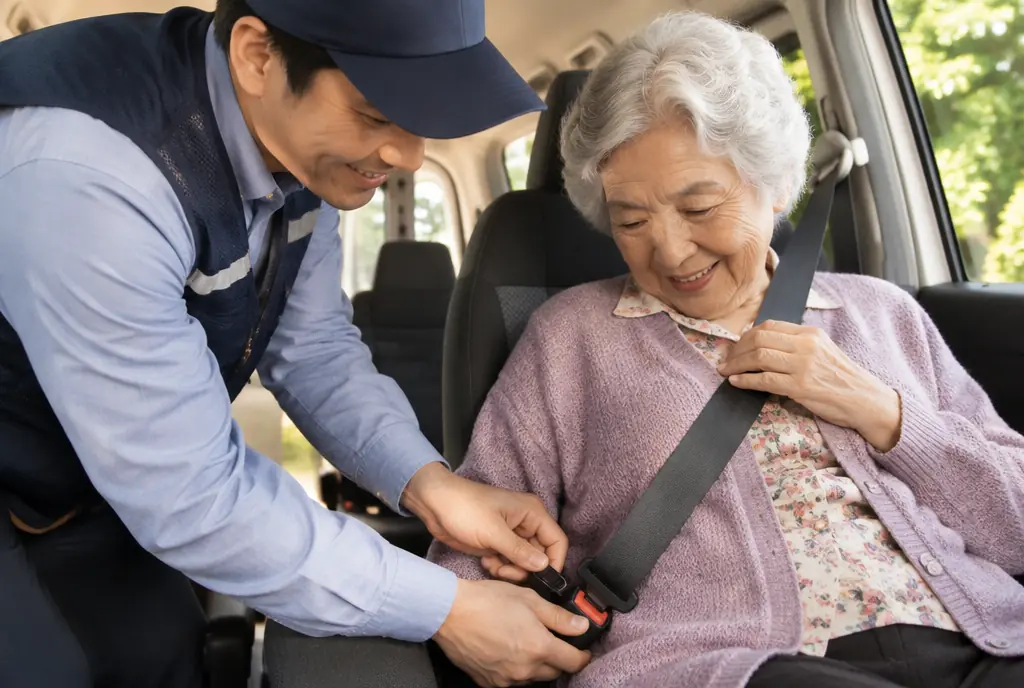
Once aboard, the chair needs to be secured so it cannot roll or tip while the vehicle is moving. Common industry practice is a four-point tie-down, with straps attached to the chair's frame at the front and back and anchored to the floor of the vehicle. The rider then wears a separate lap and shoulder belt, because the tie-downs hold the chair while the belt protects the person.
A few practical things help securement go smoothly:
- Remove or secure loose items hanging from the chair, such as bags on the handles.
- Let the driver know about any parts of the chair that should not be used as an attachment point.
- Speak up if anything feels too tight or uncomfortable once the rider is belted in.
During the ride
Riders often notice that wheelchair transportation feels calmer than a regular car trip. The vehicle is driven with smooth starts and stops in mind. If the rider becomes uncomfortable, they should tell the driver, who can pull over when it is safe to check the straps or adjust the belt.
Arriving and getting off
At the destination the process runs in reverse. The driver releases the restraints, then the lift lowers or the ramp is deployed and the chair rolls off. If you booked door-to-door service, the driver can offer help to the building entrance. Our post on the difference between curb-to-curb and door-to-door explains those levels.
Planning for appointments and return trips
Because boarding and securement take a little time at each end, build a cushion into your schedule. If the appointment is at 10:00, a pickup that gets the rider there with time to check in is better than one that lands right at the hour. For the ride home, let us know your expected finish time or how you would like to arrange the pickup.
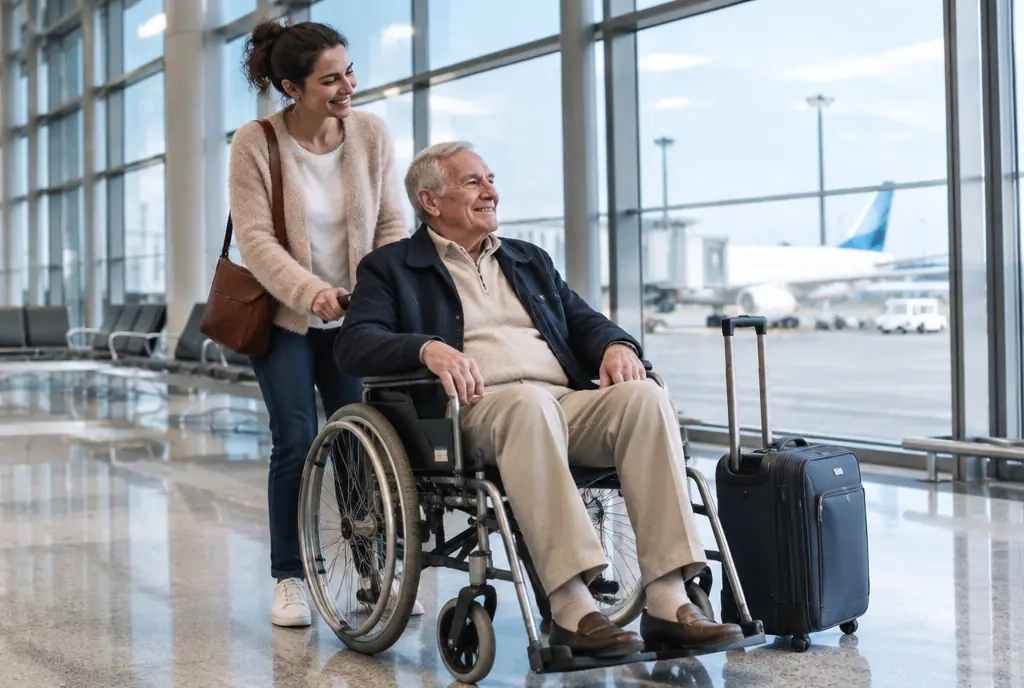
Wheelchair riders use our service for all kinds of trips, including doctor's visits, therapy sessions, dialysis and airport trips for travelers with mobility needs.
Questions worth asking before the first ride
- Can a family member or aide ride along with the wheelchair user?
- Is there anything about the rider's particular chair the driver should know?
- What is the plan if the appointment runs long?
- Are there added fees that apply to this trip? Our pricing page lists them.
Schedule a wheelchair-accessible ride
When you are ready, submit a ride request and note that the rider uses a wheelchair. Our dispatch team will call to confirm the addresses and pickup time. You can also reach our dispatch office directly at (201) 488-0170.