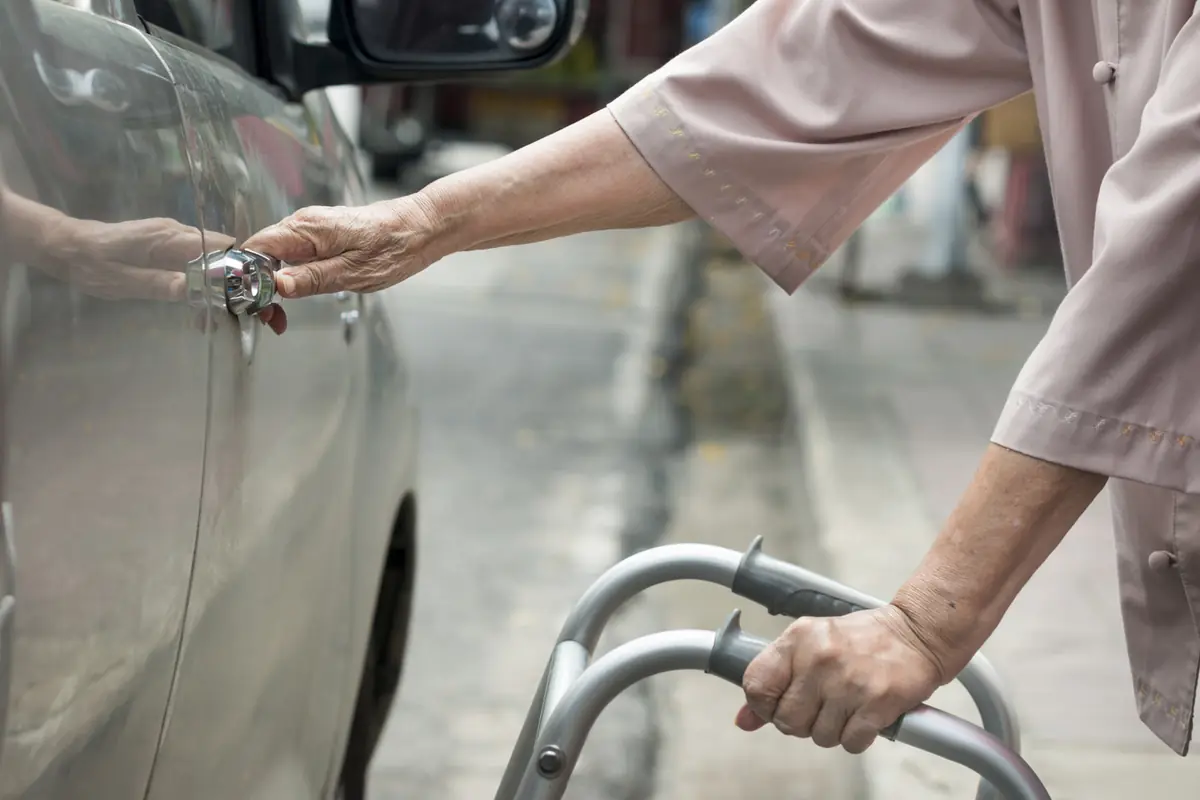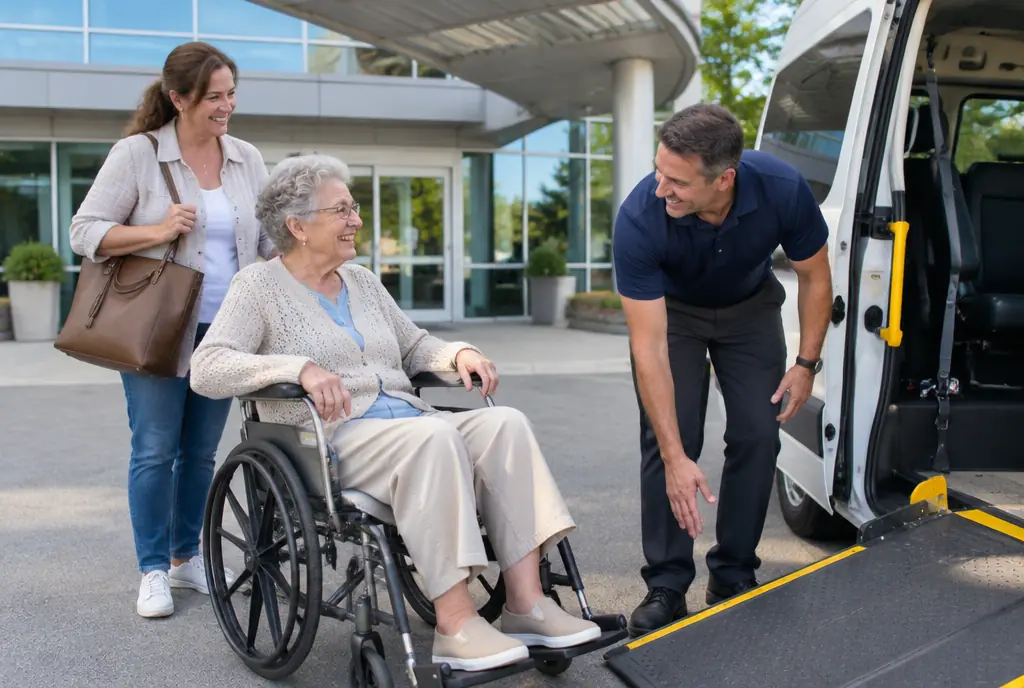
Leaving the hospital is good news, but discharge day rarely runs on a precise clock. Paperwork, final checks, prescriptions and instructions from the care team all take time, and the actual departure can come sooner or later than expected. When the patient cannot drive and family cannot easily take time off, planning the ride home ahead of time takes a lot of strain out of the day.
Start the conversation early
As soon as the care team mentions that discharge is likely, ask them a few practical questions:
- What day is discharge expected, and roughly what time of day?
- Will the patient leave in a wheelchair, with a walker or on foot?
- Do they have instructions about how the patient should travel home?
- Which exit or entrance should the ride use for pickup?
The care team is the source of any medical guidance about going home. Our role is the ride.
Choose the right type of ride
A patient's needs on discharge day may be different from usual. Someone who normally walks well may be tired or unsteady. Consider:
- Wheelchair transportation for patients going home in a wheelchair.
- Door-to-door service for patients who would benefit from help between the vehicle and the front door at home.
- Curb-to-curb rides for patients who are steady and will have someone meeting them at home.
Book with flexibility in mind
When you request a discharge ride, tell our dispatch team the hospital, the expected discharge day and the home address. On the confirmation call, talk through how timing will be handled if the discharge moves. Keep our dispatch number handy on the day, and call as soon as you have a firmer time from the care team.
Get the home ready
Arriving home is easier when the house is ready:
- Clear the walkway and steps, and treat ice in winter.
- Make a clear path from the door to the bed or favorite chair.
- Remove loose rugs and clutter that could cause a trip.
- Turn on lights if the arrival may be after dark.
- Have someone at home to receive the patient if possible.
What to bring to the hospital
If family is helping with pickup, bring:
- Comfortable clothes and shoes for the trip home.
- A bag for belongings, paperwork and discharge instructions.
- A coat or blanket in cold weather.
- House keys, if the patient will arrive home alone.
At the hospital exit
Hospital campuses can be large, with many exits. Confirm with the unit staff where the patient will come out, and tell our dispatch team. In Hackensack, for example, Hackensack University Medical Center is a large campus, and our post on getting to appointments around Hackensack has more tips about large medical campuses.
After the ride home
Discharge often leads to follow-up appointments, therapy or regular visits. It helps to book those rides early, since the patient may not be driving for some time. Our guide on planning recurring rides for ongoing therapy covers repeating trips.
Not an emergency service
A discharge ride is a planned, non-emergency trip. If a patient's condition changes and they seem to need urgent care, call 911 or speak with the care team. We explain this in when to call 911 versus booking a ride.
When the patient lives alone
Coming home to an empty house after a hospital stay deserves extra thought. Before discharge day, make sure the patient will have food in the refrigerator, any prescriptions picked up or arranged, and a phone within reach once inside. Ask a neighbor or relative to check in that evening if possible. On the ride itself, door-to-door service means the driver can offer help up to the entrance, which matters most when nobody is waiting at the door. Tell our dispatch team if the rider will arrive home alone so we know to plan for it.
If the care team has arranged home health visits or other follow-up services, keep their contact information with the discharge paperwork so it is easy to find later.
Plan the ride home
When discharge is on the horizon, request a ride online, and our dispatch team will call to confirm the hospital pickup, the home address and the timing. Questions? Call our dispatch office at (201) 488-0170.